The pharmaceutical industry is essential to global health, creating and delivering medicines that improve and save lives. From research and drug discovery to the mass production of medicines, pharmaceutical manufacturing is a complex process that involves multiple stages. Despite technological advancements, pharmaceutical manufacturing still faces challenges, including inefficiencies in production, quality control issues, and rising costs, all of which can impact the timely delivery of life-saving drugs to the market.
Artificial Intelligence is transforming various industries, and the pharmaceutical sector is no exception. By using machine learning algorithms, neural networks, and predictive analytics, AI can process vast amounts of data and identify patterns that are often overlooked by human analysis. In pharmaceutical manufacturing, AI has the potential to optimize processes, improve accuracy, reduce costs, and accelerate the production timeline. From drug discovery to real-time monitoring, AI is becoming an essential tool for ensuring high efficiency in pharma operations.
In this blog, we will explore how AI can enhance the pharmaceutical manufacturing process. From automating quality control, and optimizing production schedules to reducing human error, AI offers a wealth of opportunities to streamline operations.
Challenges in traditional method
Traditional pharmaceutical manufacturing faces several challenges. Manual processes can slow down production and lead to mistakes in quality control. Handling large amounts of data manually is difficult and prone to errors, making it hard to solve problems quickly. Supply chain management can struggle to keep up with sudden changes in demand or disruptions, causing inventory issues. Predicting equipment failures is tough without advanced tools, often leading to unexpected breakdowns and expensive repairs.
According to recent reports, the industry is heading towards an ambition of US$130 billion by 2030 and US$450 billion by 2047. These challenges highlight why AI is a game changer, offering smarter solutions to improve efficiency and quality in manufacturing.
How AI can be used in the Pharmaceutical Manufacturing Process
Pharmaceutical manufacturing consists of several vital stages that require precision, efficiency, and careful execution. From drug discovery to packaging, every step in the process is critical to ensuring the safety and effectiveness of the final product. The introduction of AI has the potential to optimize these processes, resulting in faster production, and improved quality control.
Let’s explore how AI enhances various stages of manufacturing:
#1 Drug Discovery
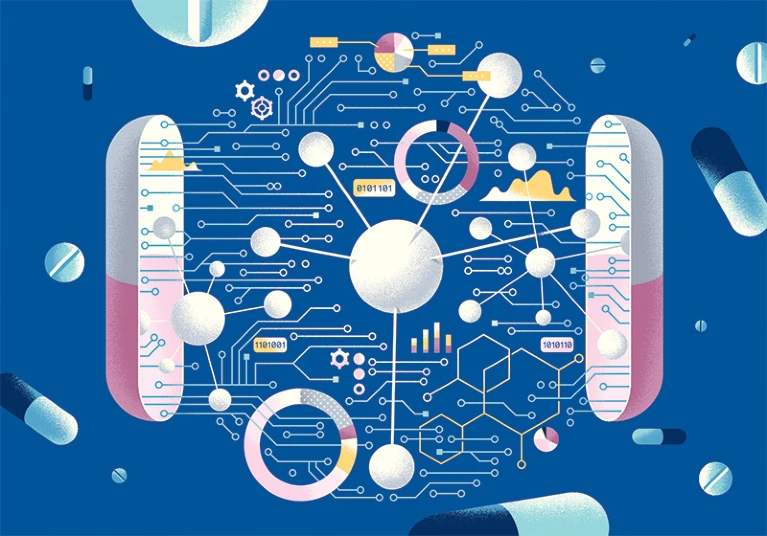
AI accelerates drug discovery by simulating chemical interactions and predicting successful drug substances. Machine learning models analyze vast datasets to identify potential compounds and optimize drug formulations more rapidly than traditional methods. Additionally, AI plays a crucial role in determining which substances can serve as Active Pharmaceutical Ingredients (APIs). By evaluating how different substances interact with APIs, AI helps to identify the most suitable excipients—substances other than APIs that are combined to create effective and stable drug products.
This capability enhances the precision and efficiency of drug development, leading to more effective treatments and streamlined research processes.
#2 Demand Forecasting and Inventory Management

AI enhances demand forecasting by analyzing historical data and market trends to predict raw material needs with high accuracy. This predictive capability helps determine the precise quantity of each material required, reducing the risk of overstocking or shortages. Additionally, AI optimizes inventory management by continuously monitoring stock levels and adjusting orders in real time.
This approach not only ensures efficient material use but also improves supply chain agility, leading to cost savings and minimized production disruptions.
#3 Tablet Quality

#4 Shape and Weight Accuracy in Tablet Compression
Ensuring that tablets are accurately compressed into the desired shape and weight is crucial for their effectiveness. Computer vision systems enhance this process by capturing detailed images of each tablet during production.
These systems check that each tablet conforms to the specified shape and also measure its weight. By analyzing visual data and weight metrics, AI can detect any deviations from the desired specifications. This real-time monitoring ensures that all tablets meet precise shape and weight standards.
#5 Uniformity in Size and Shape
Maintaining uniform size and shape across all tablets is essential for quality control. Computer vision technology enhances this aspect by continuously inspecting tablets on the production line. The AI algorithms analyze each tablet’s dimensions and shape, comparing them to predefined standards. Any variations or deviations are quickly detected and addressed, ensuring that all tablets are consistently manufactured.
This capability helps in maintaining high-quality standards and reduces the risk of producing tablets that do not meet regulatory or customer expectations.
#6 Filling and Packaging

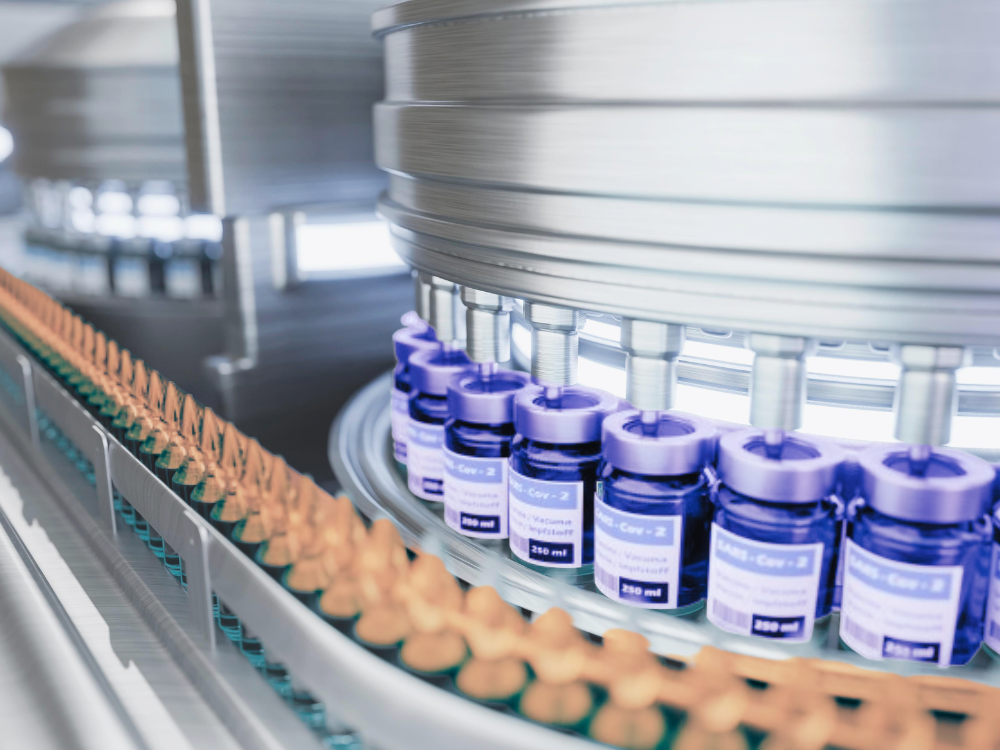
AI can transform pharmaceutical filling and packaging by working on precision and efficiency. AI-powered vision systems quickly identify and sort different drug forms—tablets, capsules, and liquids—ensuring each is correctly filled into the right container.
Automated robots, controlled by AI, can be trained to handle various container sizes, filling and sealing them accurately without spills or overfills. AI also oversees the packaging process, ensuring labels are properly applied and checking for anti-tampering features like secure seals. This AI-driven system reduces errors, speeds up production, and maintains high levels of quality and safety.
#7 Monitoring Storage Conditions

Certain drugs need to be stored under specific conditions, such as controlled temperatures or humidity levels, to prevent degradation. AI can continuously monitor these conditions in real time, using sensors and data analytics to ensure that the storage environment remains within the required parameters. This helps prevent spoilage and ensures that medications remain effective and safe for use.
#8 Optimizing Distribution

After passing final quality checks, drugs need to be distributed to pharmacies, hospitals, and other healthcare facilities. AI can streamline this process by tracking orders and managing distribution logistics. AI systems analyze data to optimize delivery routes, monitor inventory levels, and ensure timely delivery. This helps maintain an efficient supply chain and ensures that medications reach their destinations promptly and accurately.
#8 Automating BMR Validation with OCR
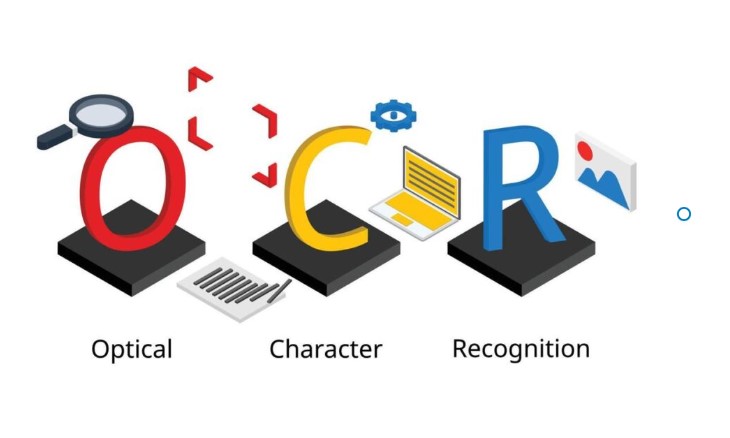
A Batch Manufacturing Record (BMR) is a crucial document that tracks the entire process of manufacturing a pharmaceutical product to ensure quality, safety, and compliance. With AI-powered Optical Character Recognition (OCR), BMR validation can be automated, transforming handwritten or printed records into machine-readable text. This automation reduces errors, enhances transparency, and eliminates the risk of data manipulation.
AI-driven OCR also streamlines audit trails, ensures regulatory compliance, and saves time by removing the need for manual data entry, ultimately improving efficiency in the pharmaceutical manufacturing process.
Challenges of using AI in the pharma manufacturing process
- Data Quality and Availability:
AI relies heavily on large volumes of high-quality data to function effectively. In pharmaceutical manufacturing, inconsistent or incomplete data can lead to inaccurate predictions and unreliable outcomes. Gathering, cleaning, and maintaining such vast amounts of data can be difficult and time-consuming.
- Integration with existing systems:
Many pharmaceutical companies already use complex systems for production, quality control, and supply chain management. Integrating AI with these legacy systems can be challenging and may require significant time, cost, and expertise to ensure seamless operation.
- Bias in AI Algorithm:
AI models are only as good as the data they are trained on. Suppose the data used to train these models is biased or incomplete. In that case, it can lead to biased results, particularly concerning pharmaceutical manufacturing where decisions impact patient safety. Ensuring that AI models are trained on diverse and comprehensive datasets is essential to avoid skewed or inaccurate outcomes.
- Cost of Implementation:
AI solutions, especially those involving advanced robotics, machine vision, or predictive analytics, can be expensive. For smaller companies, the upfront cost and ongoing maintenance can be a barrier.
Future of AI in Pharma Industry
The future of AI in pharmaceutical manufacturing looks promising, with significant growth expected in the coming years. The global AI in pharmaceuticals market was valued at USD 908 million in 2022 and is projected to soar to over USD 11,813.56 million by 2032, reflecting an impressive compound annual growth rate (CAGR) of 29.30% from 2023 to 2032.
This rapid expansion is driven by the increasing adoption of AI technologies across various stages of the pharmaceutical process. As AI continues to evolve, future innovations are likely to focus on more advanced applications, such as personalized medicine, predictive maintenance of equipment, and fully automated manufacturing processes. These advancements will help pharmaceutical companies become more agile, efficient, and capable of addressing global health challenges with greater precision.
How Pharmaceutical Industries can make this happen?

To fully harness the potential of AI, pharmaceutical companies need to collaborate with specialized AI and data annotation companies that can provide the expertise and infrastructure necessary for seamless integration. AI-driven processes like machine learning, computer vision, and predictive analytics require accurate data, and this is where data annotation plays a crucial role. By working with data annotation companies, pharma firms can ensure their AI models are trained on high-quality, labeled datasets, leading to more accurate predictions and better outcomes in manufacturing processes.
Partnering with AI consultancy firms can also offer valuable insights, helping pharma companies identify key areas for AI implementation, improving efficiency, reducing costs, and enhancing product safety.
Brainy Neurals is an AI consulting and Data Annotation service provider company in India, we specialize in helping businesses across various industries leverage the power of AI. With expertise in machine learning and computer vision, Brainy Neurals offers custom solutions designed to enhance efficiency, ensure compliance, and support innovation.
Conclusion
AI is set to reshape the future of pharmaceutical manufacturing, addressing long-standing challenges while unlocking new levels of efficiency and innovation. From the earliest stages of drug discovery to the final steps of packaging and distribution, AI-powered systems streamline operations, ensuring precision, and reducing human error. Automated processes like AI-driven quality control, real-time monitoring, and predictive maintenance are not only speeding up production but also significantly improving product safety and compliance with regulatory standards. Moreover, technologies like machine learning, computer vision, and OCR are transforming how data is analyzed, managed, and validated, leading to smarter, data-driven decision-making.
As the global demand for faster, more affordable medications grows, the pharmaceutical industry stands at a turning point. With the AI market in pharmaceuticals projected to grow rapidly, companies that embrace these technologies will gain a competitive edge, delivering life-saving drugs more efficiently while reducing costs and wastage.
The future of AI in pharma goes beyond just automating tasks; it’s about creating a smarter, more flexible manufacturing process that can handle the complex needs of today’s healthcare. AI will play a crucial role in making sure that new medicines reach patients more quickly, safely, and at lower costs, making a big difference in healthcare for millions of people around the world.