
Robotics & Hardware Automation Services — Where AI Software Meets Physical Production
We build AI robotic automation services that bridge intelligent software with physical hardware — integrating computer vision, sensor fusion, and edge AI into robotic systems, conveyor lines, industrial controllers, and IoT sensor networks. Our industrial AI automation solutions connect AI models directly to PLCs, SCADA systems, robotic arms, pneumatic actuators, and production line controllers through real-time interfaces. From smart factory AI automation to AI IoT development services and AI hardware integration — we deliver AI that does not just analyze data, but physically controls machines, rejects defective parts, stops unsafe processes, and optimizes production in real-time.
- 70 + AI Projects Delivered
- Factory-Floor Deployed Systems in Production 24/7
- PLC/SCADA/MES Integration Expertise
- NVIDIA Certified AI Architect
- Upwork Top Rated Plus
- ISO 27001
- NVIDIA Inception Partner
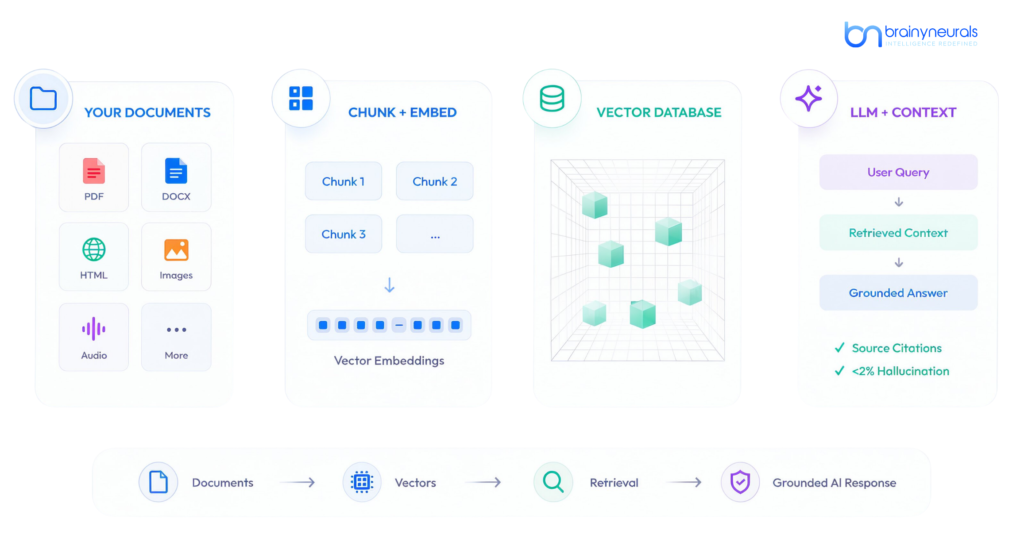
RAG Development Services That Ground Every AI Answer in Your Verified Data
- 70 + AI Projects Delivered
- 8 + Years Pure AI
- NVIDIA Certified AI Architect
- ISO 27001 Certified
- NVIDIA Inception Partner
- Upwork Top Rated Plus
Trusted by teams across USA, Europe & Asia



Founded by Mitesh Patel — NVIDIA Certified AI Architect · Upwork Top Rated Plus (Individual Profile) →
- The Missing Link
Why Most AI Projects Fail at the Hardware Interface
The AI in manufacturing market is $12.35 billion in 2026, growing at 42% CAGR. Ninety-five percent of manufacturing decision-makers have either invested in or plan to invest in AI within five years. But the peer-reviewed research tells the other side of this story: 77% of AI-powered vision systems for robotic inspection remain at the prototype or pilot scale. The models work. The deployment fails.
The reason is almost always the same: the AI team builds a model that achieves 98% accuracy in the lab, then hands it to the operations team and says “integrate this.” The operations team looks at the model, looks at their Rockwell ControlLogix PLC, their Allen-Bradley servo drives, their Cognex vision system, their Siemens SCADA, and their MES running on a legacy Oracle database — and has no idea how to connect them.
Our team, led by Mitesh Patel — an NVIDIA Certified AI Architect with hands-on experience deploying AI on NVIDIA Jetson, Qualcomm SNPE, Intel OpenVINO, and Rockwell industrial controllers — builds the complete chain: from trained AI model to optimized edge inference to hardware interface to physical action. When our defect detection model identifies a bad part, the reject signal reaches the pneumatic diverter in under 50 milliseconds. When our safety system detects a person in an exclusion zone, the machine stop command reaches the PLC before the person takes another step.
- Solutions
AI Hardware Automation Solutions We Build
Not all RAG is created equal. The right architecture depends on your data types, query patterns, accuracy requirements, and regulatory constraints. We build five distinct RAG patterns — and most enterprise deployments use a combination:

AI-Powered Robotic Systems
Our AI robotic automation services integrate computer vision and AI decision-making into robotic systems for industrial applications. We build vision-guided robotic pick-and-place systems where cameras identify, classify, and locate objects with 6-DOF pose estimation, and robotic arms (FANUC, ABB, KUKA, Universal Robots) execute precise picking, placement, and assembly operations. AI-powered bin picking using 3D depth sensing (Intel RealSense, Stereolabs ZED) to identify and grasp randomly oriented parts from bins — solving the “bin picking problem” that traditional vision-guided robotics cannot handle.
Robotic inspection stations where AI models running on edge hardware analyze parts in real-time and trigger robotic sorting — good parts continue down the line, defective parts are diverted to rejection bins with defect type classification logged for root-cause analysis. Collaborative robot (cobot) AI systems where cobots equipped with AI vision work alongside human operators, adapting their behavior based on real-time detection of human proximity, hand gestures, and workflow context.

Smart Factory AI Automation
Smart factory AI automation transforms traditional manufacturing facilities into intelligent, self-optimizing production environments. We integrate AI across the factory technology stack: at the field level, edge AI devices process camera and sensor data in real-time for inline quality inspection, safety monitoring, and equipment health assessment. At the control level, AI decisions integrate with PLCs (Rockwell ControlLogix, Siemens S7, Beckhoff TwinCAT) through OPC-UA, Modbus TCP, and EtherNet/IP protocols — enabling AI to directly influence production line behavior (adjusting speeds, triggering stops, diverting rejects, modifying process parameters). At the operations level, AI analytics feed into MES and ERP systems (SAP, Oracle, Siemens Opcenter, Rockwell Plex) for production planning, quality trending, and OEE optimization. At the enterprise level, AI-generated insights flow into business intelligence dashboards for executive decision-making.
What makes our smart factory approach different from competitors who say “we do Industry 4.0”: we actually build the integration between AI and operational technology. When we deploy a computer vision quality inspection system, it does not just flag defects on a dashboard. The AI model output triggers a physical reject mechanism — a pneumatic diverter, a robotic arm, or a conveyor stop signal — through a direct hardware interface with our edge AI device. The reject decision executes in under 50ms from frame capture to physical action. The defect classification feeds into SPC charts in your MES. The defect trend triggers a process adjustment recommendation in your SCADA. And the production summary updates your ERP for shift-end reporting. This end-to-end integration — from camera pixel to physical action to business system — is what separates a real smart factory from a demo with an AI model running on a laptop next to the production line.

AI IoT Development & Sensor Fusion
Our AI IoT development services build intelligent systems that fuse data from multiple sensor types into unified AI decision frameworks. We integrate cameras (RGB, thermal, multispectral) with depth sensors (Intel RealSense D400/L500, Stereolabs ZED 2i), LiDAR (Ouster OS series), radar, IMU and GPS modules, industrial sensors (vibration accelerometers, temperature probes, current transformers, pressure transducers, flow meters, humidity sensors), environmental sensors (gas detectors, dust particle counters, noise level monitors), and RFID and barcode readers for asset tracking.
Our sensor fusion AI development builds systems that correlate data across these sensor types in real-time — detecting patterns that no single sensor can identify alone. For example, a predictive maintenance system might fuse vibration data (detecting bearing frequency anomalies), thermal imaging (detecting hotspots), current draw (detecting motor load changes), and acoustic analysis (detecting cavitation or looseness) to predict equipment failure days before it occurs — when any single sensor would produce false positives or miss the failure entirely. We process all sensor data on edge hardware (NVIDIA Jetson, industrial PCs with Intel OpenVINO) for real-time decisions, with aggregated analytics flowing to cloud dashboards for fleet-wide trend analysis.

AI Hardware Integration & Custom Embedded Systems
AI hardware integration is the last mile of AI deployment — and the mile where most projects fail. We engineer the complete hardware integration chain: custom enclosure design for edge AI devices in industrial environments (IP65/IP67 rated, vibration-resistant, thermal-managed for continuous 24/7 operation at ambient temperatures up to 50°C), camera and sensor mounting with optimized positioning for detection requirements (field of view, resolution at target distance, lighting design), electrical integration with industrial power systems (24V DC industrial standard, UPS backup, surge protection), and network integration with existing plant networks (OT network segmentation, VLAN configuration, firewall rules for IT/OT convergence).
PLC communication interface development (OPC-UA client/server, Modbus TCP, EtherNet/IP, PROFINET — we write the PLC program blocks that receive AI decisions and trigger physical actions), SCADA integration (feeding AI analytics into existing SCADA displays and alarm systems), and MES/ERP data pipeline development (structured API integration feeding AI-generated quality data, production counts, and equipment health metrics directly into your manufacturing execution and enterprise planning systems).
Robotic Process Automation Enhanced with AI
Traditional robotic process automation handles repetitive digital tasks through scripted workflows — clicking buttons, moving data between systems, filling forms. Robotic process automation with AI takes this into a different category entirely by adding cognitive capabilities: intelligent document processing (extracting data from variable-format invoices, contracts, and forms — not just fixed templates), natural language understanding (interpreting email content, chat messages, and free-text fields to determine intent and extract structured data), decision-making under uncertainty (evaluating loan applications, insurance claims, or compliance submissions against complex policy rules with confidence scoring and human-review routing), exception handling with learning (when the AI encounters a case it cannot process, it routes for human review and learns from the human’s decision for future similar cases), and cross-system orchestration (coordinating multi-step workflows across CRM, ERP, email, document management, and legacy systems through API and UI-level integration).
We build AI-enhanced RPA for enterprises that have outgrown traditional scripted automation — where the volume of exceptions, format variations, and judgment-dependent decisions makes rule-based scripting unmaintainable. Our approach combines LLM-powered understanding (for interpreting unstructured inputs), computer vision (for processing visual documents and screen content), and agent orchestration frameworks (LangGraph, CrewAI) for managing multi-step intelligent workflows.
- Technology
Robotics & Hardware Automation Technology Stack
Every hardware automation project demands a different technology combination. We select based on your specific environment, protocols, and integration requirements — not a one-size-fits-all stack.
Ready to bridge AI and hardware? Book a free 30-minute automation assessment — we'll evaluate your production environment, PLC/SCADA setup, and map the integration architecture.
- Industries
Industries Where Our Hardware Automation Delivers ROI
Strongest Domain
Manufacturing & Industrial
Our strongest domain: inline quality inspection (computer vision detecting defects at production speed with physical reject mechanisms), predictive maintenance (multi-sensor fusion predicting equipment failures before they occur), assembly verification (confirming correct part placement, orientation, and fastener presence), worker safety (PPE detection and exclusion zone enforcement with machine-stop integration), and production optimization (AI-driven process parameter adjustment through SCADA integration). Every manufacturing deployment integrates with MES and ERP through OPC-UA and REST APIs. Our tire manufacturing case study achieved 99.2% defect detection accuracy at 200+ units per hour with edge inference on NVIDIA Jetson AGX Orin.
High Impact
Logistics & Warehousing
AI-powered warehouse automation: robotic pick-and-place with vision-guided sorting, automated inventory counting using overhead cameras and RFID fusion, conveyor control systems with AI-driven routing decisions, forklift proximity detection with automated speed reduction and alerts, and loading dock monitoring with AI-managed scheduling. Our warehouse safety system achieved zero forklift-pedestrian collisions since deployment — down from 2-3 near-misses per month.
Growing
Agriculture & Food Processing
AI hardware automation for agriculture: automated crop quality grading using computer vision on sorting lines (grade A/B/C classification at 500+ items per minute), foreign object detection in food processing lines (combining visual inspection with X-ray and metal detection sensor fusion), precision agriculture sensor systems fusing drone imagery, soil sensors, weather data, and GPS for variable-rate application control, and packhouse automation with AI-guided robotic packing and palletizing.
Infrastructure
Energy & Utilities
AI for energy infrastructure: drone-based inspection of power lines, wind turbines, solar panels, and pipeline infrastructure with edge-processed defect detection. SCADA integration for AI-driven grid optimization and anomaly detection. IoT sensor networks for environmental monitoring with edge processing at remote locations with limited connectivity. Thermal imaging fusion for transformer health monitoring and hot-spot detection.
- Delivered Results
Hardware Automation Projects We Have Delivered
Manufacturing
Tire Manufacturing — AI Inspection with Physical Reject Integration
Computer vision defect detection system integrated with production line hardware at a tire manufacturing facility. YOLO v8 model optimized with TensorRT running on NVIDIA Jetson AGX Orin processes 200+ tires per hour. When a defect is detected, the AI generates a reject signal through OPC-UA to the line PLC, which triggers a pneumatic diverter within 50ms of frame capture. Defects reaching customers reduced 85%. System integrated with MES for SPC charting and shift-end quality reports.
Manual inspection
99.2%
Detection accuracy
Logistics
Warehouse — Vision-Guided Robotic Sorting
AI-powered robotic sorting system at a distribution center. Computer vision identifies package type, reads labels, and determines destination routing. 6-DOF pose estimation enables robotic arms to pick packages from a mixed conveyor and place them into destination-specific bins. Handles 800+ packages per hour across 12 destination categories. Edge AI runs on industrial GPU server with redundant failover. Integrated with WMS for real-time inventory tracking.
Manual sorting
800+
Packages per hour
Heavy Engineering
Mining Equipment — AI Defect Detection for AIA Engineering
Computer vision system detecting surface defects (cracks, porosity, surface anomalies) on mining equipment components for AIA Engineering — the heavy engineering company manufacturing grinding media and wear-resistant castings. Custom lighting and camera configuration engineered for large metal parts with reflective surfaces. AI system processes parts during quality gate inspection, replacing subjective human visual assessment with objective, repeatable AI measurement. Integrated with quality management system for traceable inspection records.
Subjective assessment
Objective AI
Repeatable inspection
Construction
Construction Safety — Hardware-Integrated PPE Monitoring
Multi-camera PPE detection system with direct hardware integration at active construction sites. AI detects missing hard hats, vests, and boots across 16 camera feeds on a single Jetson AGX Orin. Safety violations trigger graduated hardware responses: visual LED warning panels at work zones, audible PA system alerts, mobile notifications to site supervisors, and automatic incident logging. IP65 ruggedized enclosure with solar power backup for remote site deployment. Safety violations reduced 60% in first month.
Manual monitoring
60%
Fewer violations
Technically convinced? Book a free 30-minute hardware automation assessment — no commitment required.
- Our Process
How We Deliver Hardware Automation Projects
Every RAG development engagement follows our production-proven methodology — designed to get you from documents to deployed enterprise RAG solution in the shortest path with the lowest risk. Our RAG pipeline development process has been refined across dozens of production deployments.

Ongoing: Continuous Improvement & Expansion
Remote monitoring of AI accuracy, edge device health, and system performance. Scheduled retraining on new production data. Seasonal adjustment for changing conditions. Hardware maintenance support. Expansion to additional production lines, sensors, and use cases.
Dedicated Team
Full AI + hardware engineering team embedded in your project. Best for multi-line smart factory deployments.
Project-Based
Fixed-scope automation project with defined deliverables, timeline, and budget. Most common model.
POC Sprint
4-6 week proof of concept to validate AI + hardware integration on your actual production environment.
Staff Augmentation
Embed our edge AI and PLC integration specialists into your existing automation engineering team.
- Honest Comparison
Traditional Automation vs. AI-Only Software vs. Brainy Neurals
Enterprise teams evaluating hardware automation have three options. Here is an honest comparison.
- Why Us
Why Enterprise Teams Choose Brainy Neurals for Hardware Automation
We Bridge AI Software and Physical Hardware — Most AI Companies Cannot
Most AI development companies deliver a trained model and an API. They have never connected a camera to a PLC. They have never written an OPC-UA client that sends reject commands to a Rockwell ControlLogix. They have never designed a thermal management solution for a Jetson device running 24/7 at 45°C ambient temperature. Brainy Neurals has done all of this — across 70+ production deployments over 8 years. We understand both the IT world (Python, TensorFlow, APIs) and the OT world (PLCs, SCADA, Modbus, EtherNet/IP, 24V DC, pneumatic actuators). This dual expertise is what makes the 77% of AI implementations that fail at the hardware interface succeed when we build them.

NVIDIA Certified AI Architect with Hardware Deployment DNA
Brainy Neurals is founded and led by Mitesh Patel, an NVIDIA Certified AI Architect who has personally deployed production AI on NVIDIA Jetson devices, integrated Intel RealSense depth cameras, processed Ouster LiDAR point clouds, and engineered edge-to-PLC communication interfaces in industrial environments. Mitesh’s individual Upwork Top Rated Plus profile provides third-party verification of delivery excellence. Our NVIDIA Inception partnership, AWS Activate membership, and Microsoft for Startups participation validate our capabilities across all major AI platforms.

ISO 27001 + Industrial Security
Industrial automation systems control physical processes — a security breach in an AI-connected PLC is not a data leak, it is a safety hazard. Our ISO 27001 certification ensures information security management meets international standards. Every hardware automation system we build includes OT network segmentation (keeping AI edge devices on separate VLANs from production PLCs), encrypted communication between AI and control systems, and access control with audit logging for all configuration changes.

US Market Credibility
Our leadership team includes seasoned professionals with experience at leading international brands. We operate during EST and GMT business hours with daily standups, weekly demos, and under 4-hour response times. Full IP ownership on every project — zero lock-in, zero vendor dependency.
Free Download: AI Hardware Integration Decision Guide
Edge vs. cloud vs. hybrid for your production environment. PLC protocol selection. Camera and sensor selection matrix. ROI framework for automation investments.
- FAQ
Frequently Asked Questions
What is the difference between traditional automation and AI-powered automation?
Traditional automation uses fixed rules and programmed sequences — a sensor triggers, a relay activates, a motor runs. AI-powered automation adds intelligence: computer vision identifies variable defects that fixed rules cannot detect, machine learning predicts equipment failures from complex sensor patterns, and natural language processing understands unstructured data like work orders and maintenance logs. Brainy Neurals integrates AI intelligence with traditional automation hardware (PLCs, SCADA, robotic arms) — delivering systems that combine the reliability of industrial control with the adaptability of AI.
Can you integrate AI with our existing PLCs and SCADA systems?
Yes. We engineer AI-to-PLC communication using standard industrial protocols: OPC-UA (our primary recommendation for modern systems), Modbus TCP (for legacy equipment), EtherNet/IP (for Rockwell/Allen-Bradley ecosystems), and PROFINET (for Siemens environments). AI decisions from our edge devices are translated into PLC-readable signals in real-time. We also integrate with SCADA systems to display AI analytics alongside your existing process data, and with MES/ERP systems through REST APIs for production reporting and quality management.
What is sensor fusion and why does it matter?
Sensor fusion AI development combines data from multiple sensor types — cameras, depth sensors, LiDAR, accelerometers, temperature probes, current sensors — into a unified AI decision framework. This matters because individual sensors have blind spots: a camera cannot measure vibration, a vibration sensor cannot see surface defects, a temperature sensor cannot detect dimensional deviations. By fusing multiple sensor types, AI systems detect complex conditions (like predicting bearing failure from combined vibration, temperature, and acoustic signatures) that no single sensor can identify alone. Brainy Neurals builds multi-sensor fusion systems on edge hardware with real-time processing for industrial environments.
How does AI-enhanced RPA differ from traditional RPA?
Traditional RPA follows scripted workflows — it clicks predefined buttons, copies data between fixed fields, and fails when anything changes from the script. Robotic process automation with AI adds cognitive capabilities: understanding variable document formats (not just fixed templates), interpreting natural language in emails and chat, making decisions under uncertainty with confidence scoring, and learning from exceptions to handle similar cases in the future. Brainy Neurals builds AI-enhanced RPA using LLMs for language understanding, computer vision for document processing, and agent orchestration frameworks (LangGraph, CrewAI) for intelligent multi-step workflow management.
What industries benefit most from AI hardware automation?
Manufacturing leads — AI quality inspection, predictive maintenance, and safety monitoring deliver the highest ROI because defect costs, downtime costs, and safety penalties are directly measurable. Logistics and warehousing benefit from AI-powered sorting, inventory management, and safety monitoring. Energy and utilities deploy AI for infrastructure inspection and grid optimization. Agriculture uses AI for automated quality grading and precision farming. Brainy Neurals has deployed production hardware automation systems across all four verticals, with our strongest track record in manufacturing (tire defect detection at 99.2% accuracy, mining equipment inspection for AIA Engineering, construction site safety monitoring).
- Explore More
Explore Related AI Services
Computer Vision Development
Every hardware automation system uses our CV models for detection, inspection, and guidance.
Edge AI & Embedded AI
Edge hardware selection, TensorRT optimization, and deployment for production environments.
Video Analytics & Surveillance
Safety monitoring and operational analytics powered by our DeepStream video pipelines.
AI Agent & Copilot Development
AI agents orchestrating multi-step automation workflows across enterprise systems.
AI in Manufacturing
Industry-specific page for manufacturing AI applications — inspection, maintenance, safety.
AI in Logistics
Warehouse automation, sorting systems, and safety monitoring for distribution operations.
AI POC & Pilot Development
Validate your automation concept in 4-6 weeks before full production deployment.
- Let’s Build AI for Your Everyday Challenges
Among the Top 3% of Global AI Professionals.
- 50+
AI SYSTEMS IN PRODUCTION - 9+
YEARS IN PRODUCTION AI
Led by an NVIDIA Certified AI Architect. Backed by AWS, Microsoft & NVIDIA ecosystems. ISO 27001 certified for enterprise-grade security.
Every call is a free technical assessment — not a sales pitch.
- We respond within 24 hours
Or email: hello@brainyneurals.com